
Are We in a Constitutional Crisis? Pt. 4
What Today’s Headlines Look Like in That Pattern

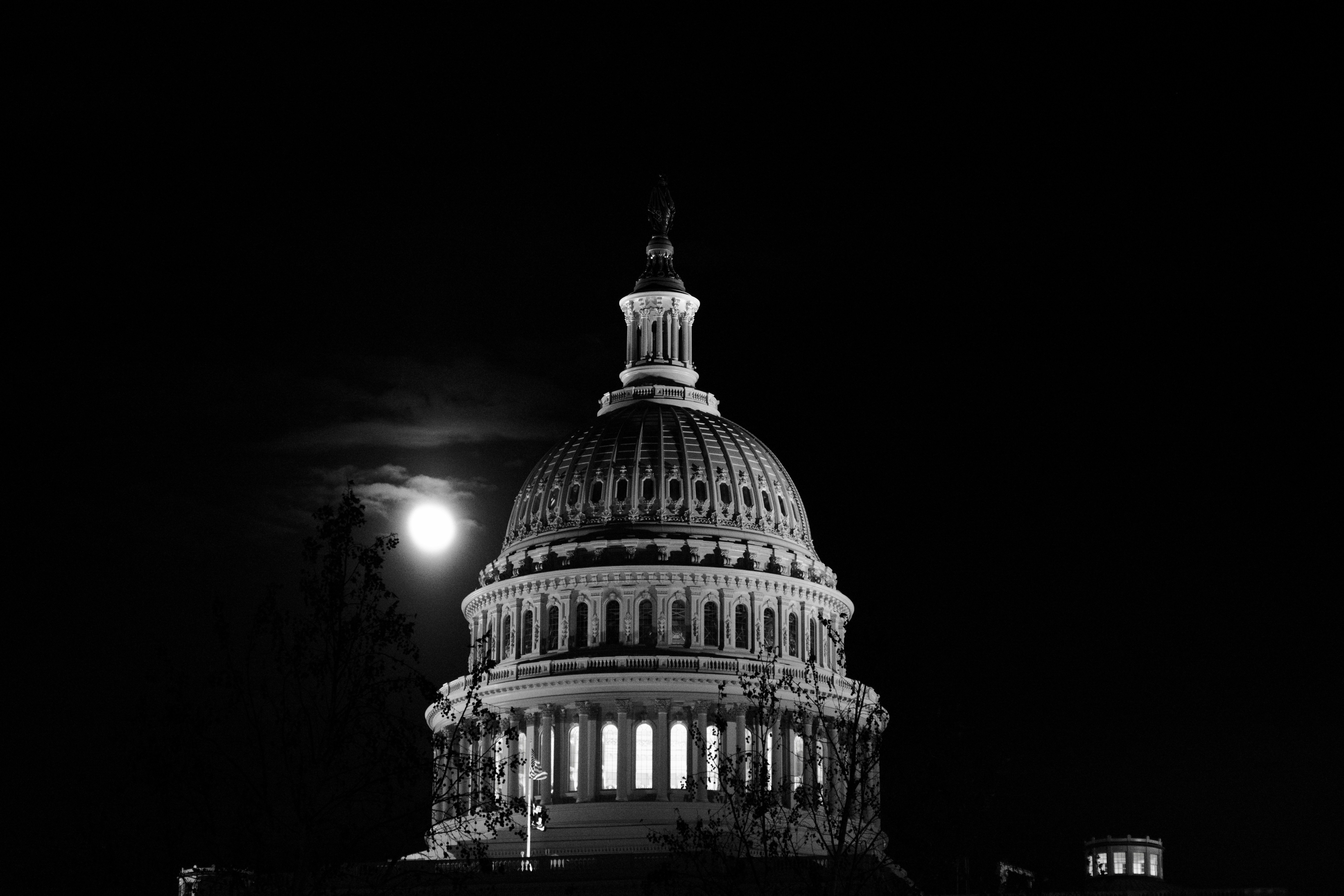
Photo by MIKE STOLL on Unsplash
History rarely announces itself when it turns. Democracies don’t usually fall in one dramatic moment; they get reframed, hollowed out, and slowly repurposed while everyone argues online about whether we’ve “really” hit a constitutional crisis yet. The institutions are still there on paper, but their meaning starts to shift.
Right now, the headlines feel like a firehose. War in Iran. ICE raids are expanding, and detention numbers are climbing. Protesters in the streets from college campuses to city centers. A Congress that shrugs at its own war powers and dodges real oversight fights. The Justice Department is slow‑walking or hiding documents when they involve presidents and other powerful men. New “election integrity” pushes like the SAVE Act that sound boring and technical until you realize they change who can actually get on the voter rolls in the first place.
Each of these stories gets covered as if it lives in its own silo: foreign policy here, immigration there, civil liberties over in that column, elections in a different section. But that’s not how power works, and it’s not how history works. Taken together, they look a lot like the pattern I’ve written about before: elections kept but repurposed, due process treated as optional, “national security” used as a shield against oversight, institutions left standing but gradually hollowed out.
So instead of asking, “Is this the constitutional crisis?” I want to ask a more useful question: how do these specific moves on war, raids, protests, Congress, DOJ, and voting map onto the warning signs we already know from history? Because if we’re honest, what we’re living through right now feels less like calm disagreement inside a healthy system, and more like severe constitutional strain that is hardening into precedent, the stage that often comes just before the real break.
Elections as Control, Not Constraint (2026 Version)
One of the clearest warning signs in democratic backsliding isn’t that elections disappear, but that they stop acting as a check on power and start acting as tools to protect it. In past pieces, I wrote about how leaders who are sliding toward authoritarianism keep the rituals of voting but work quietly to decide who is allowed to show up and which results are treated as “real.” The ballot box is still there, but more and more energy goes into controlling the inputs: who can register, who gets purged, whose ID “counts,” which communities are made to feel watched or unwelcome.
That’s the lens I see in the new wave of “election integrity” pushes, including things like the SAVE Act and its cousins. On the surface, they promise to stop non‑citizens from voting, even though that’s already illegal and vanishingly rare; underneath, they tighten documentary requirements to register, tie eligibility more closely to federal databases, and increase pressure to scrub voter rolls aggressively. If you have a passport in a drawer and haven’t moved in a decade, these changes can feel like harmless paperwork. If you’re younger, lower‑income, have moved frequently, or don’t have easy access to your birth certificate, they quietly raise the bar for you to participate at all. The message is not “everyone’s voice counts,” but “your voice counts if you can clear this maze of proof.”
In other words, if the SAVE Act (or one of its variations) passes, elections would still happen, but their role would be shifting from constraint to control. The state wouldn’t be abolishing the vote; it would be narrowing who gets to be recognized as a legitimate voter and treating scrutiny of that process as suspicion rather than responsibility. The more energy a system spends on policing the boundaries of the electorate, the less it treats elections as a way to hold power accountable and the more it treats them as a way to lock power in. And elections don’t exist in a vacuum; how the state treats your right to vote sits on top of how it treats your rights in every other context, including due process.
Due Process Is Always First: From Warrants to Raids
In every historical example I’ve looked at, due process is one of the first things to bend. Democracies don’t usually start by announcing that certain people no longer have rights; they start by changing when, and for whom, those rights actually apply. Warrants become “optional” in certain cases. Surveillance is expanded under the banner of safety. Entire communities are talked about as suspects first and neighbors second. On paper, the protections still exist. In practice, more and more people are pushed into spaces where those protections are delayed, weakened, or ignored.
That’s what our current wave of immigration enforcement looks like to me. The growth in ICE raids and detention isn’t happening in some made up fantasy; it is happening in a context where “criminal” and “immigrant” get blurred together, where deaths in custody are treated as unfortunate side effects instead of red flags, and where people are afraid to open the door or go to work because “operations” might be underway. The legal system technically remains, but for the person being picked up in a parking lot or separated from their family, due process becomes something you might get later, if you can find a lawyer, if you can navigate the system, if you survive the wait.
When a government normalizes that kind of exception, it doesn’t stay contained to one group. The message is that the state can move first and explain, or correct, later. That’s why due process erosion is such a reliable early warning sign: it tells you that power is getting used in ways that no longer feel obligated to respect rights in real time. And once a society gets used to seeing some people treated as less entitled to those protections, it becomes easier to extend that logic outward, to protesters, to political opponents, to anyone who can be framed as a threat.
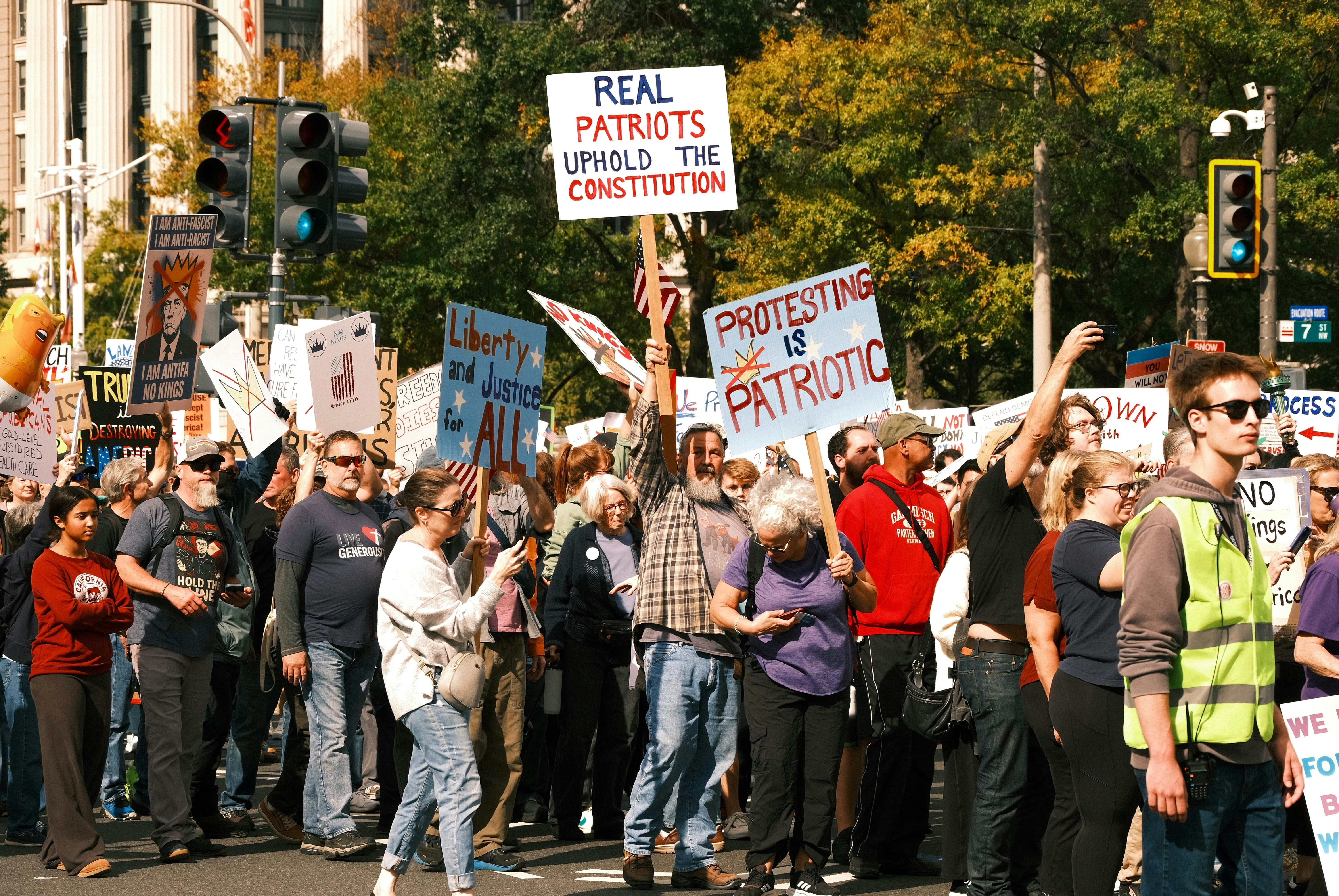
Photo by Kaden Taylor on Unsplash
National Security as a Shield Against Oversight
Every democracy needs some level of secrecy. That’s not controversial. There will always be intelligence that can’t be made public in real time, operations that genuinely need to stay quiet, details that shouldn’t show up on cable news. The problem begins when “national security” stops being a narrow exception and starts becoming the default answer to any hard question about how power is being used.
You can see that drift in how war decisions and security policies are being handled right now. Major choices about the use of force, surveillance authorities, and on‑the‑ground operations are made first and justified later, if at all. Congress is briefed behind closed doors and then declines to meaningfully challenge or constrain what’s happening. Requests for information about legal justifications, targeting decisions, or civilian harms are turned into battles over classification and “ongoing operations,” rather than being treated as basic oversight. The message isn’t “we’re accountable, but some details must stay secret”; it’s “asking too many questions is itself a problem.”
When that becomes normal, the constitutional balance starts to tilt. National security stops being a shared responsibility and becomes a shield that leaders can raise whenever scrutiny gets uncomfortable. Oversight bodies still exist on paper, but they’re expected to nod along, not dig in. Courts still technically have jurisdiction, but cases get dragged out or narrowed until they no longer touch the real decisions being made. And just like with elections and due process, the pattern is the point: power that doesn’t have to explain itself to the institutions designed to restrain it is power that is learning to operate on its own terms.
Institutional Dismantling Without Formal Abolition
One of the hardest parts of talking about democratic erosion is that, from the outside, almost everything still looks “normal.” Courts are in session. Congress gavels in. Agencies issue reports. Elections are scheduled on time. If you only glance at the surface, it’s easy to say: see, the system is still there. What’s missing is not the existence of institutions, but their willingness and ability to do the thing they were built to do: meaningfully constrain power.
You can see this gap in how different branches are handling the current moment. Congress is technically present, but too often chooses not to assert its war powers or push hard on oversight when it really matters, especially if doing so would create friction with the executive. Investigations into misconduct by presidents and other powerful figures move slowly, with levels of redaction that leave the public with more questions than answers. Agencies that are supposed to be neutral are staffed and steered in ways that align them more closely with one faction’s priorities, even as they insist they’re just “following policy.”
The result is a system that still has all the familiar shapes but less and less of the original substance. Hearings become performances rather than genuine attempts to get to the bottom of anything. Court rulings are treated as obstacles to be worked around rather than as guardrails to be respected. The public is told that “the process is working,” while watching outcome after outcome that suggests the process mostly works for the already powerful. That’s what institutional dismantling looks like in a country that still holds elections and cites the Constitution; it’s not a formal shutdown, it’s a slow draining of power from the places that were supposed to keep everyone else honest.
Strain vs. Crisis: Where We Actually Are
When people ask whether we’re in a constitutional crisis, they’re really asking whether the brakes still work. Do courts still matter? Does Congress still have a spine? Are elections still capable of changing who holds power? Or have those mechanisms become so warped that the system is just running on the momentum of whoever sits at the top?
By the definitions I’ve laid out in this series, we are not in open constitutional collapse. Branches still exist, courts still issue rulings, elections are still held, journalists still report, people still protest, and sometimes those efforts do change outcomes. There are pockets of resistance and institution‑level pushback that matter, and it would be dishonest to pretend otherwise just for dramatic effect. The framework is still there.
At the same time, it would be just as dishonest to call this “normal strain.” The pattern I’ve tried to walk through in this piece, elections being narrowed and repurposed, due process bending under the weight of raids and “operations,” national security invoked as a shield against real oversight, institutions that look intact but behave more like spectators than referees, is textbook democratic backsliding. It is what scholars describe when they talk about systems that have not fully fallen, but are moving into a gray zone where formal democracy coexists with deep, deliberate imbalance.
So where are we? We are in severe, accelerating constitutional strain that is laying the tracks for a crisis if it isn’t interrupted. The rules haven’t completely stopped working, but they’re being stretched, selectively applied, and quietly rewritten in ways that will be very hard to undo later. That’s why attention matters now, not after some future “breaking point” we imagine will be obvious when it arrives. You don’t wait for tanks in the streets to decide whether this is serious; you look at how power is being used today, and whether it still feels obligated to accept limits.
This series has never been about declaring collapse or telling you to give up. It’s about noticing the pattern while we still live in a country where our choices matter. That starts small: paying attention to local voting rules and purges, showing up for neighbors when raids or protests hit close to home, supporting watchdogs and legal orgs that are still doing the slow, boring work of pushing back, and refusing to shrug when those in power wave off basic questions with “trust us” and “classified.” You don’t have to fix everything yourself. But you do have a say in whether this moment gets normalized or named.