
If Rights Require Permission, We Are Already in Trouble

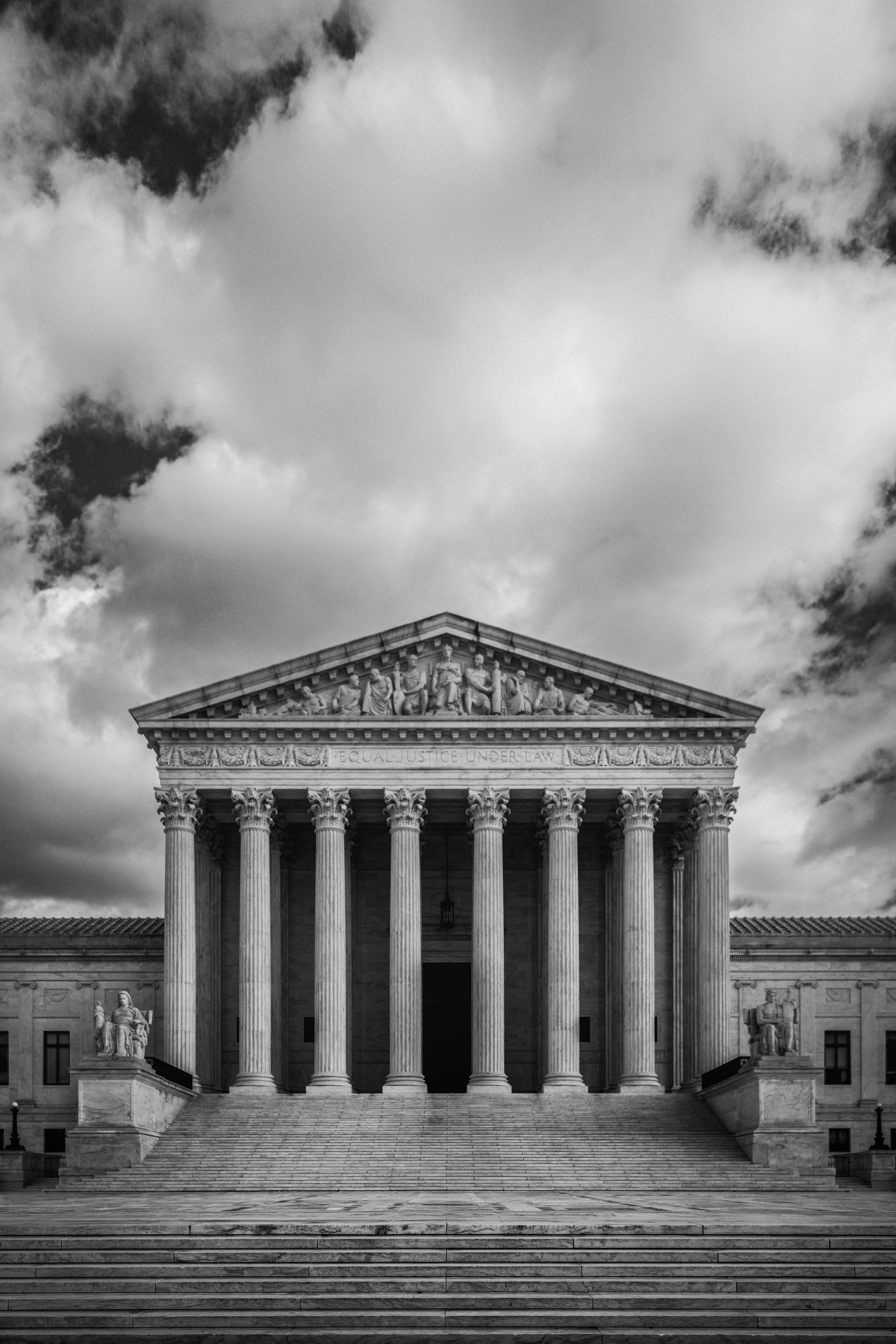
Photo by Tim Mossholder on Unsplash
Editor’s Note
This piece reflects publicly available reporting, video evidence, and official statements as of January 27, 2026. New information continues to emerge. While specific details may evolve, the structural patterns and constitutional concerns outlined below remain consistent and warrant careful attention.
There comes a point where refusing to name a pattern becomes more dangerous than naming it too early. We are past that point. What we are witnessing is not a series of isolated failures, misunderstandings, or unfortunate tragedies; it is the convergence of power, force, and permission in ways that political scientists, journalists, and historians recognize immediately. When rights are treated as conditional, when state violence is justified before it is examined, and when institutions designed to restrain power instead accelerate it, the word for that is not hysteria. It is fascism.
Some people are still asking whether what we are living through has a name. Others know the name but refuse to say it, because saying it would require admitting that this is no longer just politics as usual. And some are looking straight at it and choosing not to see it at all. But systems don’t wait for consensus to harden; they advance while people debate semantics. When dissent is treated as a threat, rights are reframed as privileges, and violence is excused in the name of order, we are no longer approaching fascism. We are watching it function.
I’m done pretending this is confusing. I’m done pretending we need more time, more facts, more distance before we’re allowed to speak plainly. What is happening right now follows a pattern that has played out across countries and decades, and it always begins the same way: power consolidates, accountability erodes, and the public is told that safety requires obedience. This is not strength. This is not order. This is fascism, and it advances fastest when people are taught that naming it is the real danger.
Pattern Recognition: When the System Tells on Itself
Calling something fascism isn’t about rhetoric. It’s about pattern recognition. Systems reveal themselves not through a single act, but through repeated behavior, especially when those behaviors converge across different institutions, different policy areas, and different legal domains.
At this point, the pattern is no longer subtle.
The killing of Alex Pretti in Minneapolis is not alarming simply because it happened, but because of what followed. Video evidence and eyewitness accounts quickly surfaced that appear to contradict the federal government’s narrative. Yet the administration moved immediately to defend the federal agent involved, before transparency, before independent investigation, before meaningful public accountability. When lethal force is justified first and examined later, the message is clear: power will protect itself.
At the same time, federal immigration enforcement has expanded into cities against the expressed wishes of state and local governments, eroding the balance of power that federalism is meant to preserve. ICE deployments are no longer cooperative; they are imposed. Centralized force replaces negotiated authority, and local consent becomes irrelevant.
Congress, the branch constitutionally tasked with restraining executive power, has been largely absent. Oversight hearings stall. Accountability mechanisms fail to materialize. Members of Congress have been denied access to ICE detention facilities, despite their clear legal authority to conduct inspections. When lawmakers are blocked from oversight, it is not a bureaucratic dispute; it is a constitutional breach.
Transparency itself has begun to erode. The Department of Justice has been accused of violating statutory transparency requirements, continuing a broader pattern of withholding information that should, by law, be available to the public and to Congress. Where transparency fails, accountability follows.
Executive overreach has not been limited to immigration or law enforcement. The president has invoked “emergency” powers to impose sweeping tariffs without congressional approval, bypassing the branch explicitly granted authority over trade. Emergency powers, once meant to be narrow and temporary, have become tools for circumvention.
Meanwhile, videos have surfaced of ICE agents telling civilians that filming them makes them “domestic terrorists.” This rhetorical shift is not accidental. Observation becomes suspicion. Documentation becomes threat. Dissent becomes danger.
None of these actions exists in isolation. Together, they form a system:
State violence defended without pause.
Federal authority overriding local governance.
Legislative oversight obstructed.
Transparency undermined.
Emergency powers normalized.
Dissent reframed as threat.
This is not chaos. It is coherence.
The Look-Away
Authoritarian systems do not survive on violence alone. They survive because enough people find reasons not to look directly at what is happening.
Some are exhausted. The pace is relentless. The emotional cost is real. But exhaustion does not stop history from moving; it only removes witnesses. Silence born of fatigue may be understandable, but it is still functional.
Others retreat into rationalization. They wait for perfect facts, complete investigations, absolute certainty. Complexity becomes a shelter rather than an explanation. But when patience is demanded only of the public, while power acts immediately and without restraint, delay becomes permission.
And then there are those who see what is happening and refuse to name it. Not because they don’t understand, but because understanding would require reckoning. Bias doesn’t make people innocent. It makes their blindness predictable.
Different motivations. Same outcome.
Silence, deferral, and denial all serve the same system. They allow power to consolidate without resistance, norms to erode without objection, and rights to be reframed without protest.
Authoritarianism does not require belief. It requires quiet.
Looking away does not keep people safe. It only delays who is harmed first.
The Constitutional Stakes
What makes this moment dangerous is not that laws are being tested. Laws are tested all the time. What makes it dangerous is that constitutional protections are being treated as conditional.
The Constitution exists to restrain power.
The First Amendment protects dissent, not comfort. When protest is reframed as provocation and documentation is treated as a threat, speech survives only in theory.
The Second Amendment, however contested, cannot be retroactively transformed into a justification for lethal force without collapsing the meaning of lawful conduct itself.
The Fourth Amendment is implicated whenever force is deployed without proportional justification and when observation is treated as suspicious.
The Fifth Amendment, due process, is perhaps the most fragile. Due process is not a courtesy extended after harm; it is the mechanism meant to prevent harm. When accountability is delayed indefinitely and institutions close ranks before facts are established, due process collapses in practice even if it remains on paper.
Rights that apply only sometimes are not rights.
Protections that depend on discretion are not protections.
A constitutional crisis does not begin with the suspension of law. It begins when constitutional limits stop functioning as limits.
The Line We Are Crossing
This is where neutrality ends.
Not because everyone must protest.
Not because everyone must agree.
But because systems like this do not require mass enthusiasm, only enough silence to proceed uninterrupted.
If you are waiting for absolute certainty, you will always be late.
If you are waiting for someone else to speak first, you are already following.
Democracy is not self-sustaining. It survives only when ordinary people refuse to normalize the erosion of their own rights.
If rights require permission, we are already in trouble.
And if silence is what that system needs to continue, then refusal is no longer radical.
It is a civic responsibility.