
Law and Order That Leaves People Dead: ICE in Trump’s America
Written because I’m too angry to say this out loud right now.

Author’s note: I usually record these pieces too. Today, I can’t. There is a level of rage and grief in me that I’m not willing to smooth over for the camera. So for now, I’m offering this in writing. If and when I have the bandwidth to speak it out loud, I will. But the fact that I can’t today is part of the story too.
I was working on fixing my script and Substack for Houston when news broke of yet another ICE-involved killing, this time in Maine. Another operation, another claim of “officer safety,” another person dead in what was supposed to be a controlled enforcement action. The names and cities change. The pattern doesn’t.
This is the piece I was already writing, and I’m not going to pretend that this is about a single incident. It’s about the system that makes deaths like these predictable.
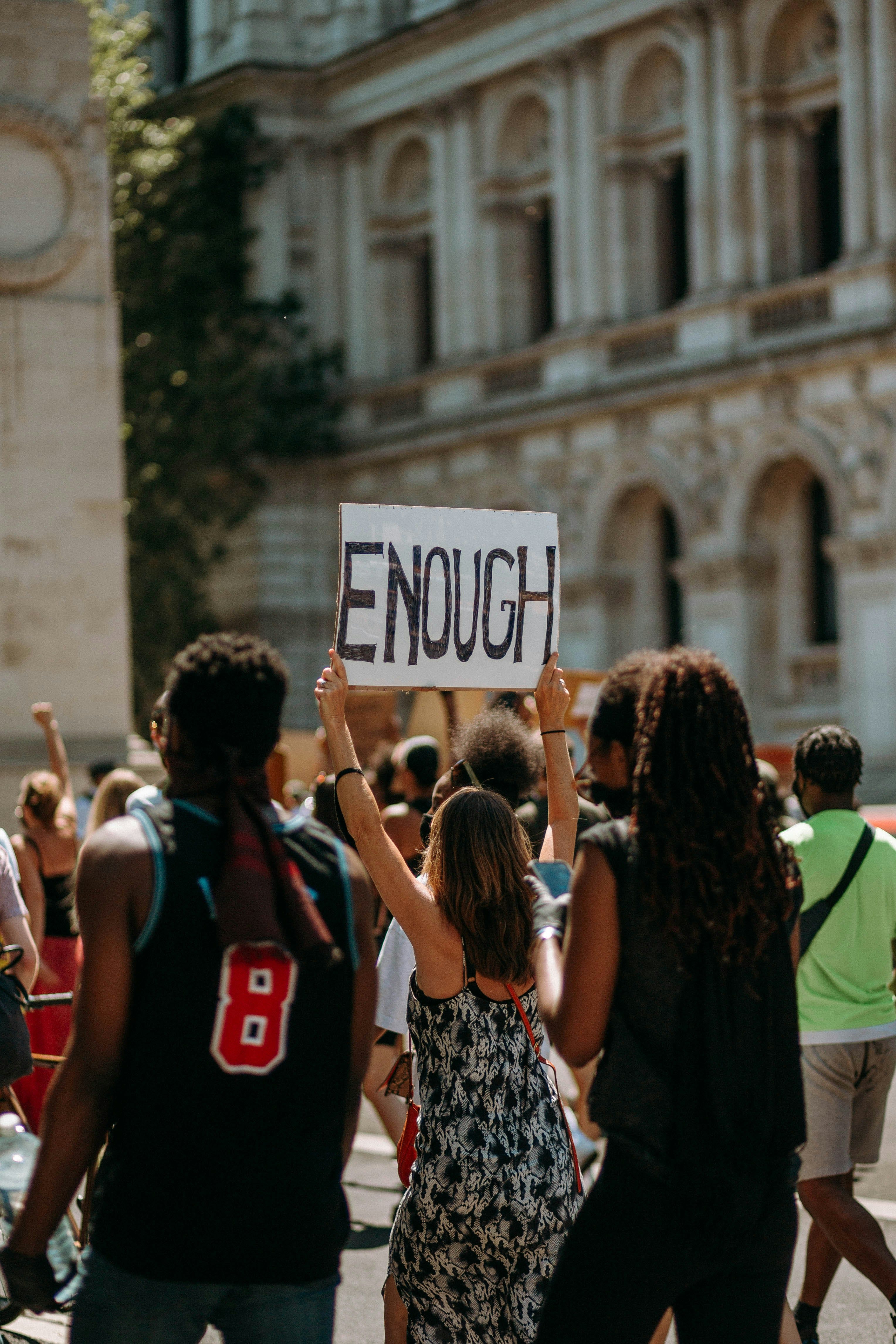
I’ve been on this story since before I had a Substack or a podcast. Back when Trump’s second-term immigration crackdowns first started, I was calling out the inhumane treatment on my personal Facebook page, the raids that felt more like paramilitary cosplay than “law and order,” the way people were being disappeared into detention, the way “toughness” was being used as a cover for cruelty.
I said then, and I’ll say again now: the ends do not justify the means when those means are deaths, shattered families, and human dignity treated as expendable. We don’t get to pretend that “safety” is achieved by killing people who weren’t even the target of the operation.
Lorenzo Salgado Araujo was a Mexican national who had lived in Houston for roughly 35 years. He was a business owner. He was a father. He had no criminal convictions. And he was shot and killed by an immigration officer during a raid where he wasn’t the person they were even supposed to be going after. That is not an accident; it’s the predictable outcome of an enforcement system that has been told, over and over, that the rules are optional and the courts are a nuisance.
In this piece, I want to stay with that reality: what it looks like when incompetence and cruelty are turned into policy, when court rulings are treated like threats instead of limits, and when “collateral damage” becomes a euphemism for killing people who were never supposed to be in the crosshairs.
A pattern I’ve seen coming
I want to be honest about why this hits so hard. It’s not just the horror of one man’s death; it’s the feeling of watching a train wreck you’ve been screaming about for a year.
When the immigration crackdowns started, we saw:
Raids carried out by masked, heavily armed agents in neighborhoods that had never been treated like war zones.
Citizens and long‑term residents detained or swept up because they “fit a profile.”
Detention centers where people were dying of neglect, untreated medical conditions, and violence, while official statements called it “unfortunate” and moved on.
We saw courts step in: blocking birthright citizenship changes, pausing some enforcement overreach, ordering investigations, and providing better medical care. And instead of taking those rulings as guardrails, this administration treated them as annoyances, obstacles to work around. When you start treating the Constitution and the courts as optional, you don’t just get chaos in the abstract; you get chaos with names, faces, and funerals.
Lorenzo’s story in the pattern
I don’t want Lorenzo to be just another data point. He was a real person whose life held meaning far beyond a headline.
He’d built a life in Houston over three and a half decades. A family. A business. Roots. He wasn’t somebody hiding in the shadows; he was woven into his community. He wasn’t even the person ICE said they were going after that day.
We are told, after the fact, that he “weaponized his vehicle,” that officers “feared for their safety.” We’ve heard that script before. It’s the same script used any time an operation goes sideways, and someone ends up dead: the details are fuzzy, the justification is sharp.
When you put that next to the broader pattern, a growing number of deaths in detention, multiple fatal shootings during enforcement actions, a spike in injuries and killings since the crackdown ramped up, it becomes very hard to call this a series of isolated mistakes. This is what happens when you send a message from the top that more force is always justified, that more bodies in custody are a success metric, and that the courts telling you to slow down are just part of the opposition.
And then, as I’m writing about Houston, another person is killed in an ICE-involved shooting in Maine. Different place, same script. How many times are we supposed to call that a coincidence?
Cruelty plus incompetence as policy
Immigration enforcement is supposed to be about law: clear statutes, due process, checks and balances. What we’re watching instead is a culture that treats cruelty and incompetence as acceptable costs, or worse, as proof of “toughness.”
You see it when officers are deployed in ways that maximize fear instead of safety. You see it when detention centers are packed beyond capacity, and basic medical care is treated as a luxury. You see it when the administration frames rising death counts as unfortunate collateral damage rather than as proof that the system is failing.
And you see it in the gap between what courts say and what the executive actually does. Judges can block an executive order; they can issue injunctions; they can demand investigations. But if the people carrying out the policy treat those rulings as suggestions, the harm continues, just a little more quietly, a little more deniably.
That’s the core of what I want you to feel here: this isn’t just cruelty. It’s cruelty plus incompetence, handed a badge, a gun, and political cover. That combination is lethal.
What this says about who is seen as expendable
There’s a brutal hierarchy at work in how these policies land.
People with certain passports, certain skin tones, certain accents, certain zip codes are treated as expendable. Their deaths are framed as unfortunate but understandable. Their communities are expected to mourn quietly and move on.
The same administration that screams about “law and order” has presided over record deaths in immigration custody and a surge in shootings tied to enforcement actions. The same people who insist they’re defending the Constitution cheer when due process is shaved down and when “suspected” becomes enough to justify lethal force.
If you say you’re one of the ones out here screaming we are a “Christian nation,” if you claim to care about family, community, and the sanctity of life, then people like Lorenzo should matter. A father killed, a business owner shot during an enforcement operation that wasn’t even supposed to involve him, a neighbor whose absence leaves a hole, that should break your heart and raise your voice. And let’s not forget, this isn’t the first instance where ICE agents have targeted the wrong person, or even murdered someone in the streets. There’s a clear pattern.
Why I’m staying on this, and why you should too
I’m going to keep coming back to these stories because they tell us more about our politics than any slogan ever will.
You can’t say you care about safety if your policies leave more people dead, more families destroyed, and more communities living in fear of a knock on the door. You can’t say you care about the law if you treat court rulings as optional and build enforcement strategies that routinely trample rights.
And you can’t say you’re fixing the system if your fixes are just making it more chaotic, more violent, and more detached from basic human dignity.
I know it’s exhausting. I know it’s tempting to look away. But every time we normalize “collateral damage,” every time we shrug and say “well, that’s what happens,” we give this model more room to grow. We tell future presidents and future agencies that they can keep pushing the line and that most of us will stay quiet.
What you can do, even if you’re not in Houston
You may not live in Houston. You may not know anyone personally who’s been detained or raided. But you’re still part of the public this system claims to serve.
A few places where your voice matters:
Local and state oversight: support efforts to demand independent investigations when people are killed in raids or detention. Don’t accept internal reviews as the last word.
Ask your representatives, plainly:
“How many people have died in immigration custody or enforcement actions on your watch?”
“What are you doing to make sure rulings are actually being followed, not just fought?”
“Do you believe deaths like Lorenzo’s are acceptable collateral damage?”
Pay attention to how immigration is talked about in your circles. When people reduce lives to labels, “illegal,” “invader,” “problem”, “those people”, push back. Bring it back to names, families, and the reality that policy choices have bodies attached to them.
You don’t have to have all the answers. You don’t have to be an expert. But you can refuse to let this kind of death fade into the background noise.
Lorenzo should still be alive. That’s the sentence I can’t get away from.
He wasn’t the target of the operation. He wasn’t a violent threat. He was a man who’d built a life in Houston over decades, killed during a crackdown that has turned “enforcement” into a blunt instrument with far too many innocent people caught underneath it.
And somewhere in Maine, another family is now planning a funeral for someone killed in the name of the same “law and order.”
If we let that slide, we’re not just failing them; we’re telling every future administration that this level of harm is acceptable, as long as they say the right words about safety and toughness.
I’m Patty. If this raised questions for you, sit with them. Talk about them. Ask the people who represent you what they’re doing to stop this from happening again. And as always: take care of yourselves, take care of each other, and I’ll talk to you in the next one, when I’m ready to speak this out loud.