
Pride Started With a Riot, Not a Rainbow

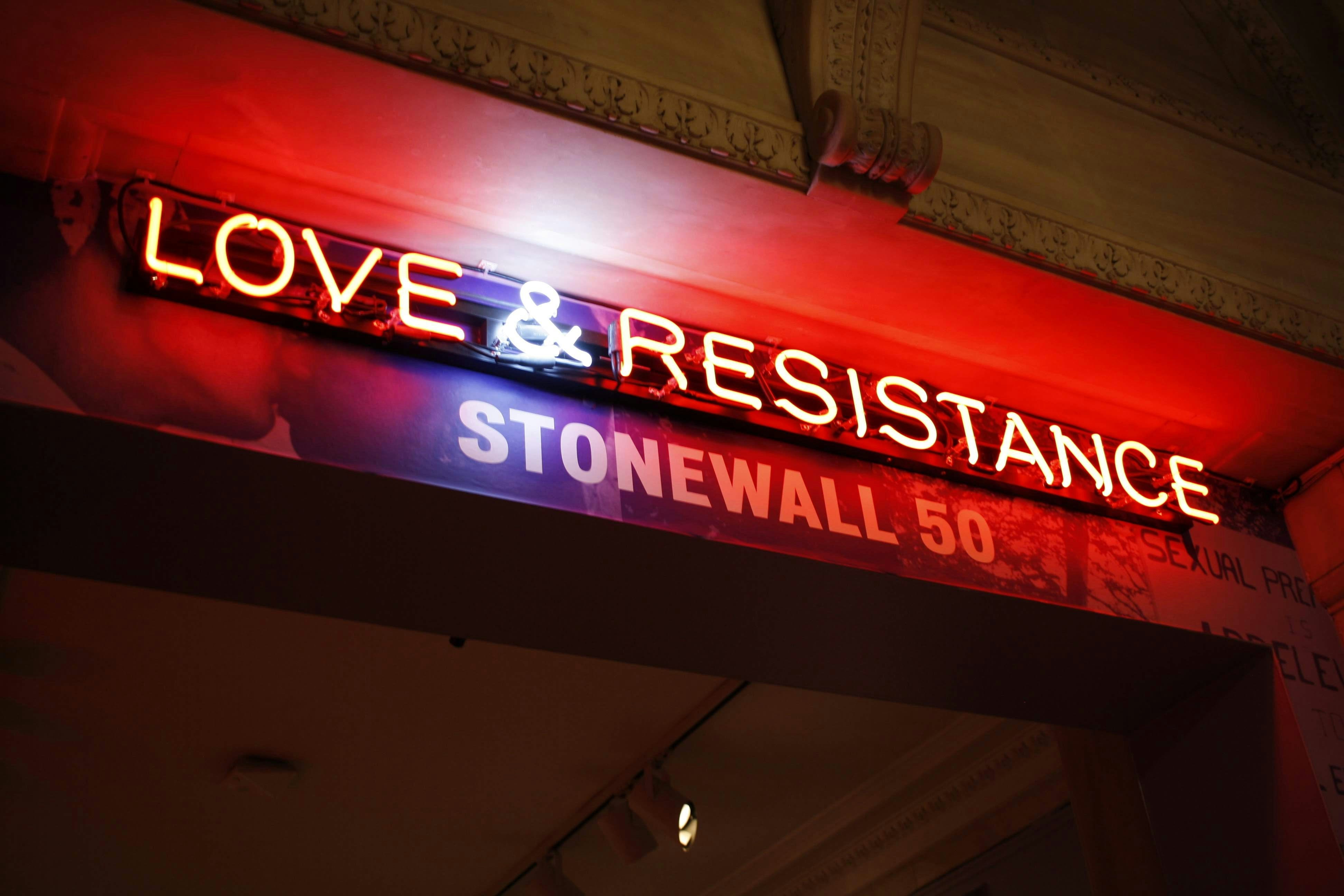
The First Pride Was a Riot. That Still Matters.
Every June, my feeds fill up with rainbow logos, limited‑edition Pride merch, and politicians who remember queer people exist… for about thirty days. Meanwhile, a lot of those same institutions are backing policies that make queer and trans life smaller, scarier, and more policed.
So before we dive into a month of corporate‑washed “love is love” posts, I want to start somewhere less comfortable and more honest: Pride began as a riot against police brutality and criminalization. It was led by people who were tired of being arrested, beaten, and humiliated for existing in public.
That origin story matters for how we think about Pride in 2026, especially if we say we care about justice, faith, and how power actually works.
Before the Parades: Queer Resistance Didn’t Start in 1969
Stonewall is often framed as the “beginning” of queer resistance, but people were organizing long before a brick ever flew in New York.
In the 1950s and 60s, homophile organizations like the Mattachine Society and others were quietly challenging police harassment and discriminatory laws. Activists held “Reminder Day” pickets every July 4 outside Independence Hall in Philadelphia, dressed in suits and dresses, asking the most basic question: does “liberty and justice for all” apply to us too?
If you zoom out even further, you find people like William Dorsey Swann, a formerly enslaved Black man who, in the 1880s and 1890s, organized drag balls in Washington, D.C., resisted police raids, and called himself a “queen of drag” while fighting for the right to gather and dress as they chose. Swann and his community were raided, arrested, surveilled, and they pushed back anyway.
Queer and trans people have been negotiating with, hiding from, and resisting state power for a very long time. Stonewall was a flashpoint in a much older story.
Stonewall: When People Finally Fought Back
On June 28, 1969, just after midnight, New York City police raided the Stonewall Inn, a gay bar in Greenwich Village, using “masquerade” and cross‑dressing laws as justification. These laws said your clothing had to match the gender on your ID, a convenient excuse to target trans and gender‑nonconforming people.
That night, something was different. Instead of quietly submitting to another humiliating raid, patrons and bystanders resisted. The confrontation turned into several nights of uprising in and around Christopher Street, with queer and trans people, many of them homeless, poor, and people of color, fighting back against police violence.
Those six days didn’t come out of nowhere; they came out of years of harassment and organizing. But they did something new: they made queer resistance visible, loud, and unignorable in a way the country hadn’t seen.
From Riot to March to Month
A year later, on June 28, 1970, activists didn’t just hold a memorial service and go home. They organized the Christopher Street Liberation Day March in New York City, alongside similar marches in Los Angeles, Chicago, and other cities, to mark the anniversary of Stonewall. Thousands of people marched, chanted, and claimed space, not in suits and pearls, but in a much less “respectable,” much more liberated way.
A bisexual activist named Brenda Howard was central in turning that one‑year remembrance into something bigger. She helped coordinate the first Pride march and came up with the idea of a whole week of events around it, what would eventually become the Pride celebrations we know today. Howard, along with other activists such as Robert A. Martin and L. Craig Schoonmaker, helped popularize the word “Pride” for these gatherings, insisting on a shift from shame to dignity.
Fast‑forward a few decades: these marches spread around the world, becoming annual fixtures in city calendars. In the U.S., June was first officially recognized as “Gay and Lesbian Pride Month” by President Bill Clinton in 1999 and 2000, and later as LGBT Pride Month under President Barack Obama. That arc, from illegal bar raid to presidential proclamation, is not just cultural. It’s legal and political.
Pride Has Always Been About Law and Power
Because we’re not just talking about parades here. We’re talking about who the law protects, who it punishes, and who it pretends not to see.
Take Harvey Milk. In 1977, he became one of the first openly gay elected officials in the United States when he won a seat on the San Francisco Board of Supervisors. He helped pass a local ordinance banning anti‑gay discrimination in housing and employment, proof that when queer people gain access to office, they can write protections into law, not just plead for mercy from the outside.
Milk also helped defeat California’s Proposition 6, which would have banned gay and lesbian people from teaching in public schools and required firing anyone who supported them. That’s Pride in action: not just marching, but blocking legislation designed to erase queer people from public life.
Fast‑forward again and you see openly LGBTQ+ leaders occupying statewide and national power: governors like Maura Healey in Massachusetts, Tina Kotek in Oregon, and Jared Polis in Colorado are part of a generation of officials who don’t just lobby from the sidelines; they sign bills, veto attacks, and shape budgets. Representation is not a magic spell, but it absolutely changes the conversations happening inside statehouses and governor’s mansions.
In the courts, the story continues. Over the last few decades we’ve seen:
Decisions striking down parts of the Defense of Marriage Act in United States v. Windsor (2013).
Obergefell v. Hodges (2015), where the Supreme Court recognized same‑sex marriage nationwide.
Bostock v. Clayton County (2020), where the Court held that firing someone for being gay or transgender is a form of sex discrimination under federal employment law.
Justice Ruth Bader Ginsburg was part of the majority in key cases that extended constitutional protections against gender and sexuality‑based discrimination, continuing her lifelong project of expanding who “equal protection” actually covers. These are not abstract wins; they change who can be jailed, who can be fired, who can marry, and who is treated as fully human on paper.
Pride, in other words, is not separate from policy. It is one front in a long struggle over law.
2026: Pride in a Backlash Year
All of this brings us to now. Pride has never existed without backlash. The raids didn’t stop when the first parade was held. The AIDS crisis brought a tidal wave of stigma and neglect. Moral panics have cycled through “groomers,” bathrooms, books, pronouns, and sports, often with Christian language wrapped around them for legitimacy.
Today, queer and especially trans people are facing a fresh wave of bills around the country targeting health care, school curricula, bathroom access, drag performances, and basic public participation. Many of the loudest champions of these laws claim to be “protecting children” or “defending religious freedom,” even as the policies themselves increase vulnerability, isolation, and state control over people’s bodies and families.
Which is why I keep coming back to this: the first Pride was not a corporate campaign. It was an uprising against police and legal systems that made queer life a crime. It was poor, working‑class, Black and brown, trans and gender‑nonconforming people saying, “enough.”
If we want to honor that history in 2026, we can’t stop at rainbows in June and silence when the legislative session comes back into swing.
What I’m Doing Here This Month
On this Substack, my lane is pulling the camera back: looking at systems, power, and the human beings caught in between. So for Pride Month, here’s what you can expect from me:
Short dives into key moments in queer and trans history that still shape our politics.
Breakdowns of current legislation and court cases—what they actually say, who wrote them, and who they harm or protect.
Reflections on faith, deconstruction, and what it means to show up for queer and trans neighbors in a time when “religious liberty” is often weaponized against them.
If you’ve ever asked, “Why do we still need Pride?” or “Isn’t this just a party now?”, this series is for you. My hope is that by the end of this month, Pride will look less like a seasonal aesthetic and more like what it has always been at its core: a demand for safety, dignity, and power for people who have been told, over and over again, to disappear.
And if you’re queer or trans and reading this: you’re not an “issue.” You’re not a debate topic. You are the reason any of this exists at all.
I’m glad you’re here.