
“Show Your Papers to Vote”
Why the SAVE Act Is an Anti‑Democracy Bill

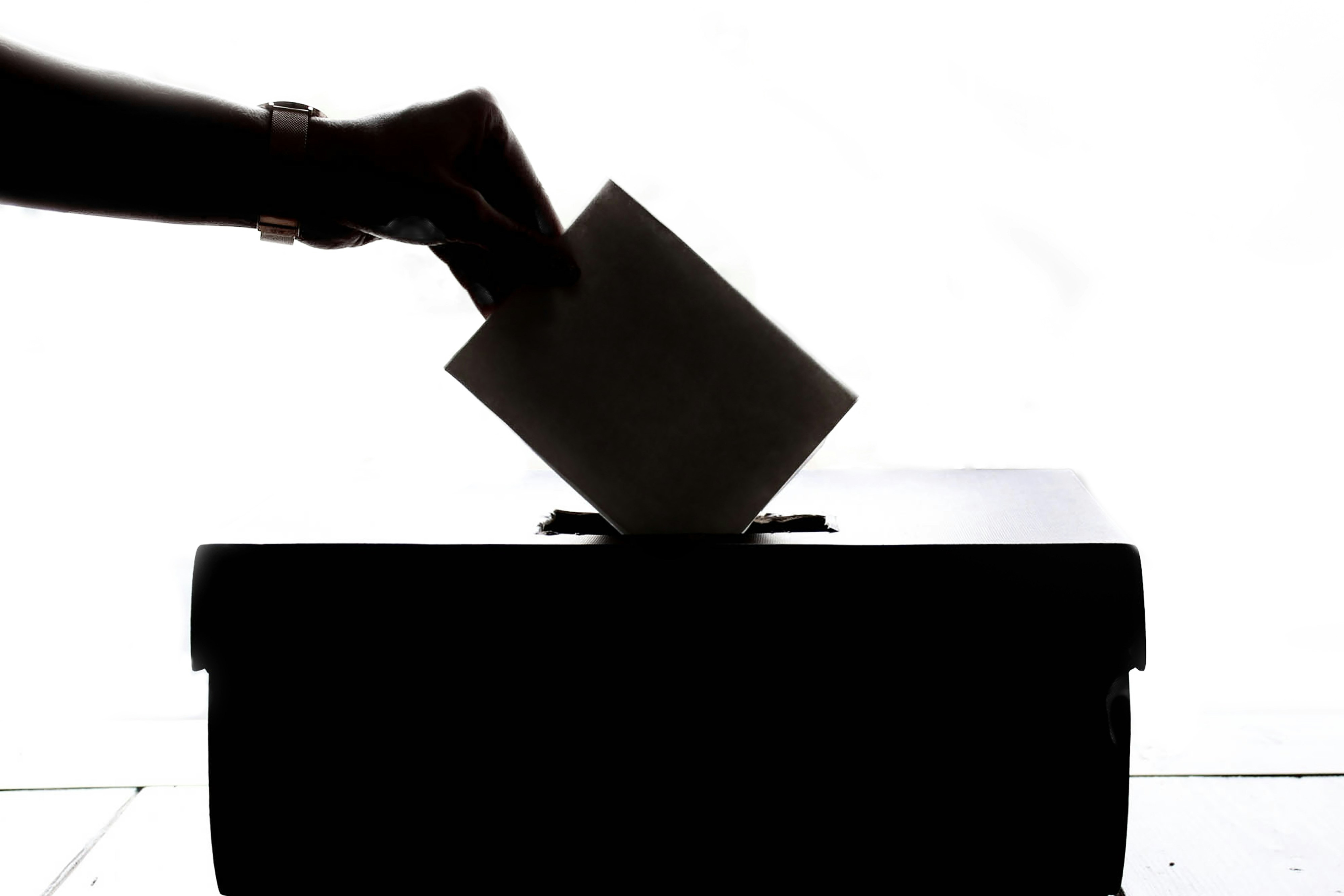
Photo by Element5 Digital on Unsplash
There’s a new “election integrity” bill moving through Congress that, on paper, sounds harmless: the SAVE Act.
In reality, it’s a “show your papers to vote” plan that would strip voting rights from millions of eligible Americans, especially women, people of color, and people with lower incomes. Responsivegov.org
A quick story
Imagine you’ve voted in every election for years.
You move, get married, change your last name, or your wallet gets stolen.
When you go to re‑register or fix your information, you’re told your driver’s license and Social Security number aren’t enough anymore. You now need to dig up a birth certificate in your maiden name from another state, or track down old naturalization paperwork you haven’t seen in a decade.
You don’t have money for fees. You can’t take a random day off work to stand in line at some government office. And if you’re like most people, you don’t have a valid passport sitting around at home.
Under the SAVE Act, that’s not a nightmare scenario. That’s the point.
What the SAVE Act would actually do
Supporters say the SAVE Act is just about making sure only citizens can vote. That’s already the law. Voting by non-citizens in federal elections is illegal, and people already have to swear under penalty of perjury that they are citizens when they register. Axios
What this bill really does is change how you prove that, and it does it in the harshest way possible.
The SAVE Act would:
Require documentary proof of citizenship (like a passport, birth certificate, or naturalization papers) whenever someone registers or updates their registration for federal elections. Brennan Center
Make in‑person paperwork the norm, which effectively cripples or kills:
Mail‑in voter registration
Online voter registration
Voter registration drives on campuses, at churches, and in communities
Push states to run aggressive database “audits” and purges based on often‑incomplete records, without strong protections to stop eligible voters from being wrongly kicked off. Brennan Center
On paper, that might sound technical. In practice, it means the easiest, most accessible ways to get on the rolls are the first to go.
Who gets hurt most
Whenever politicians talk about “tightening” voting rules, it’s worth asking: whose lives are we actually tightening?
Here’s what we know from past proof‑of‑citizenship schemes and voting‑rights research:
At least 21 million U.S. citizens of voting age don’t have documents like passports or birth certificates readily available. Brennan Center
More than 140 million Americans don’t have a passport at all. American Progress
Name changes matter. Up to 69 million women changed their names after marriage and may not have a birth certificate that matches their current legal name, which can create extra hoops and doubts when they try to prove citizenship. Brennan Center
In places that tried similar rules, like Kansas and Arizona, thousands of eligible citizens were blocked or delayed from registering to vote because they couldn’t produce the “right” paperwork in time, even though they were citizens and often had lived there for years. R Street
Behind those numbers are specific groups of people:
Women, especially those who took a married name decades ago and never updated every single document.
Black, Latino, Native, and other voters of color, who are less likely to have passports and more likely to face barriers getting documents issued and corrected. Responsive Gov
Low‑income voters, who are less likely to have passports and more likely to struggle with fees, transportation, time off work, and navigating bureaucracy. American Progress
Young people, students, military families, and renters, who move more often and rely heavily on mail‑in and online registration. Brennan Center
Disabled and rural voters, who may not be able to just “swing by” a county office with an armful of documents. Brennan Center
The bill doesn’t say “we’re going to make it harder for these people to vote.” It doesn’t need to. The design takes care of that.
“Stopping non‑citizen voting” is the excuse, not the goal
Let’s talk about the talking point you’re going to hear over and over: “This is just about stopping non‑citizens from voting.”
Again: non‑citizens voting in federal races is already illegal. It’s already a crime to lie on a voter registration form. Local election officials already have tools to catch and punish the rare cases that do happen. Axios
What we don’t have is evidence that non‑citizen voting is happening at any meaningful scale. Studies and audits keep finding it is extremely rare, and when isolated cases pop up, they are usually caught. American Progess
Meanwhile, we do have evidence of what proof‑of‑citizenship laws actually do:
Kansas passed a strict proof‑of‑citizenship law that ended up blocking more than 31,000 eligible citizens from registering before courts shut it down. American Progress
Courts in multiple states have found similar laws violate federal protections and create barriers for eligible voters that are way out of proportion to the tiny number of alleged non‑citizen voting cases. R Street
When you put that together, a pattern shows up: this isn’t fixing a real, widespread problem. It’s creating a new one and calling it “security.”
Why I see this as an anti‑democracy bill
Democracy is not just about counting ballots correctly on Election Day. It’s about whoever gets the chance to cast a ballot in the first place.
A bill that:
Targets the most accessible ways to register (mail, online, drives).
Makes people chase rigid paperwork, at their own expense, on their own time.
Hits women, people of color, and low‑income communities first and hardest.
…is not a neutral “cleanup” of the system. It is a choice to shrink the circle of people allowed to participate.
That’s the choice the SAVE Act makes.
It’s also arriving in a political moment where the loudest voices backing it are very open about wanting to make voting “harder,” especially for certain groups and certain methods like mail‑in ballots. It aligns with a broader pattern since 2020: more purges, fewer drop boxes, stricter ID requirements, and constant suspicion aimed at voters themselves.
If you design a system that makes it easy for some people to vote and hard for others, you’re not protecting democracy. You’re deciding whose voice counts.
The human cost over time
Another thing that doesn’t show up in bill summaries: the long tail of discouragement.
Research on voter suppression shows that when eligible voters are turned away once, because they were purged, didn’t have the right ID, or couldn’t produce documents in time, they are much less likely to try again in later elections. Being treated like a suspect or a liar at the polls doesn’t just affect that one election. It sends a message: “Your voice isn’t welcome here.” Brennan Center
And that message lands hardest in communities that already carry the weight of discrimination, underfunded schools, worse health care, and over‑policing. When you add voting barriers on top of that, you’re not just tweaking policy. You’re tightening a system that already keeps certain neighbors on the margins. Brennan Center
That’s anti‑democratic in the most basic sense: democracy is supposed to widen the table, not quietly remove chairs from one side of it.
A neighbor‑love and justice lens
I come at this from a simple moral starting point: if you believe in loving your neighbor, you should want your neighbor’s voice heard, even if they vote differently than you.
If a government believes it gets its legitimacy from the consent of the governed, it should be making it easier for every eligible person to register and cast a ballot, not harder. The SAVE Act does the opposite. It wraps that choice in language about “integrity,” but integrity that mainly shows up as extra hoops for poor, people of color, women, disabled, and younger voters is not integrity. It’s a targeting strategy. Brennan Center
If you have to redesign the rules of voting so that your side is more likely to win, your real problem isn’t non‑citizen voting. Your problem is that you don’t trust your ideas in a fair fight.
What we can do
Depending on where this bill is when you read this, here are a few concrete steps:
Pay attention to the details. When you hear “proof of citizenship,” ask: What documents? How do people get them? Who pays? What happens to people whose lives don’t fit perfectly on paper?
Talk about who’s actually affected. When the conversation stays abstract, it’s easy to shrug. When we center the women whose names don’t match, the worker who can’t miss a shift, the student who only has a school ID, the stakes get real.
Support groups doing the work. Voting‑rights organizations, legal advocacy groups, and community organizations are already fighting these bills in courts, in legislatures, and at the local level. They need money, attention, and amplification.
Push for pro‑democracy reforms. Automatic voter registration, same‑day registration, expanded early voting, and better language access are all things we could do instead if the goal were actually to ensure eligible citizens can vote.
The SAVE Act isn’t just bad policy on the margins. It’s part of a bigger, deliberate effort to carve people out of the electorate while pretending we’re just “cleaning up the rolls.” And when you look at who those people are, it becomes very clear whose democracy is being protected, and whose is being quietly taken away. Responsive Gov