
The “Normal” We’re Missing Isn’t There Anymore
On grief, politics, and why we can’t just “go back”

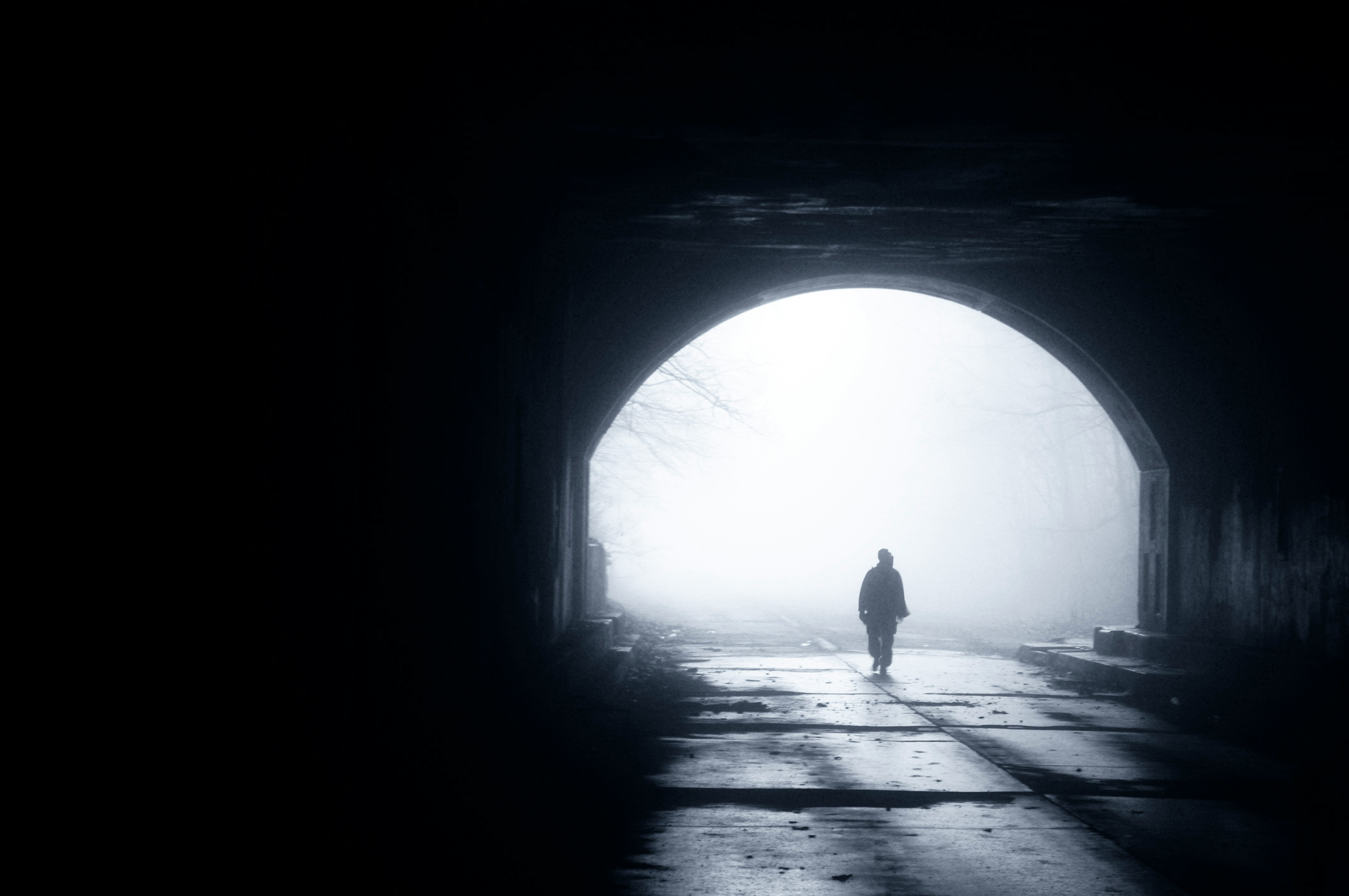
Photo by Chris Buckwald on Unsplash
There’s a question I’ve been sitting with lately.
A friend asked me if I thought our country would ever “go back to normal.”
Not “will things get better,” but specifically: back to normal.
I paused, because I wanted to give her something hopeful and simple.
But the most honest answer I had was: I don’t think that place exists anymore.
What we really mean by “normal.”
When most of us say we want “normal” back, we’re not talking about a perfect golden age. We’re talking about a time that felt livable.
A time when:
The news could be background noise instead of a five‑alarm fire.
You could tune out for a few days without worrying you’d miss something that changes everything.
You could assume, even reluctantly, that the people in charge would at least keep the wheels from fully coming off.
That emotional baseline, basic stability, predictable ground under your feet, has been eroding for years.
But this past year has pushed many of us past a threshold.
For many people, “normal” meant not constantly thinking about protests, presidential statements, court decisions, or whether Congress can get its act together long enough to do the bare minimum. It meant having the option to be politically aware without feeling politically consumed.
The threshold we crossed
Look around at what we’ve lived through recently.
We’ve watched millions of people pour into the streets, not just once, but over and over, because they feel like screaming is the only way to be heard.
We’ve watched a Congress that struggles to perform the most basic functions of governing, getting stuck on even routine responsibilities.
We’ve watched the constant churn of crisis, scandal, and outrage seep into our sleep, our relationships, and for some, our health.
This isn’t just “politics as usual.” Researchers are literally documenting how politics is damaging people’s mental health, raising stress, anxiety, hopelessness, and a sense of threat that never quite turns off.
So when someone asks, “Will we ever get back to normal?” I don’t hear a policy question.
I hear a grief question.
Underneath it is something more like:
“Will I ever feel safe, steady, and okay in my own life again?”
The answer I wish I could give
I wish I could tell my friend, and you, that one election or one news cycle will reset the clock and drop us right back into 2012 or 2005 or whatever year you privately miss.
I wish I could say: “Just hang on until [insert date], then things will calm down.”
But I’d be lying if I did.
The truth, at least how I see it, is this:
The old “normal” is gone.
The damage, political, social, institutional, and emotional, is real.
Even if the faces in power change, we are not going back to a world where politics is something that happens “over there” while we live our lives “over here.”
That sounds bleak, and some days it feels bleak.
But I don’t think it has to be hopeless.
If we can’t go back, what now?
If the old normal is gone, that means we can stop waiting for someone to hand it back to us.
Instead, we can start asking a harder but more honest question:
What does a new kind of normal look like, one that we help build on purpose?
Maybe that new normal looks like:
Being more awake and less naive about how power works, without letting it devour our entire inner life.
Protecting our mental health and staying engaged, instead of swinging between doom‑scrolling and checking out completely.
Finding small, real communities, online and offline, where we can tell the truth, compare notes, and remember we’re not crazy and we’re not alone.
Accepting that conflict and uncertainty are part of the landscape now, while still insisting on boundaries, rest, and joy in our personal lives.
None of that fixes everything. It doesn’t magically repair institutions or erase the damage.
But it does give us a way to live with what’s happening instead of pretending we’re one step away from time‑travel.
You’re not broken for feeling this way
If you’re tired, angry, scared, or numb, you’re not weak, and you’re not overreacting.
You’re reacting like a human being in a time that keeps insisting on being abnormal.
You’re allowed to mourn the world you thought you’d grow old in.
You’re allowed to be furious at the people and systems that brought us here.
You’re allowed to feel completely overwhelmed some days and still show up in whatever way you can.
And maybe our job now isn’t to chase the old “normal,” but to be the kind of people who build something more honest, more awake, and more grounded than what we had before.
If this is you right now…
If this hit you in the chest a little, you’re not the only one.
I’d genuinely love to hear:
What does “normal” mean to you when you think about it now?
Do you feel like you crossed a personal threshold with politics in the last year or two?
What’s one small thing that helps you stay sane or grounded in all of this?
Drop a comment, send me a message, or share this with someone who’s been whispering, “I just want things to go back to normal.”
They’re not alone, and neither are you.