
War Powers, Escalation, and the Question of Authority
One week into the Iran conflict, questions remain about the justification for the strikes, Congress’s role, and the growing global impact.

Over the past week, the United States and Israel launched coordinated military strikes against Iran, triggering retaliatory attacks across the region and pushing the Middle East into one of its most volatile moments in recent years.
American service members have already been killed in retaliatory strikes, oil markets have surged amid shipping disruptions in the Persian Gulf, and lawmakers in Washington are now debating the constitutional limits of military action.
But perhaps the most striking feature of the past week is not just the escalation itself.
It is the uncertainty surrounding why the strikes occurred when they did, what the long-term objective is, and how Congress intends to respond.
Understanding these questions requires stepping back from the daily headlines and examining three key issues:
• the stated justification for the strikes
• the constitutional structure governing war powers
• the broader geopolitical and economic consequences now unfolding.
The Question of an “Imminent Threat”
The White House has stated that the strikes were intended to stop what officials described as an “imminent threat” from Iran.
However, when reporters have asked for further clarification about the nature of that threat, the administration has not publicly provided detailed evidence.
Several press briefings have featured repeated questioning from journalists attempting to understand what intelligence triggered the timing of the attack.
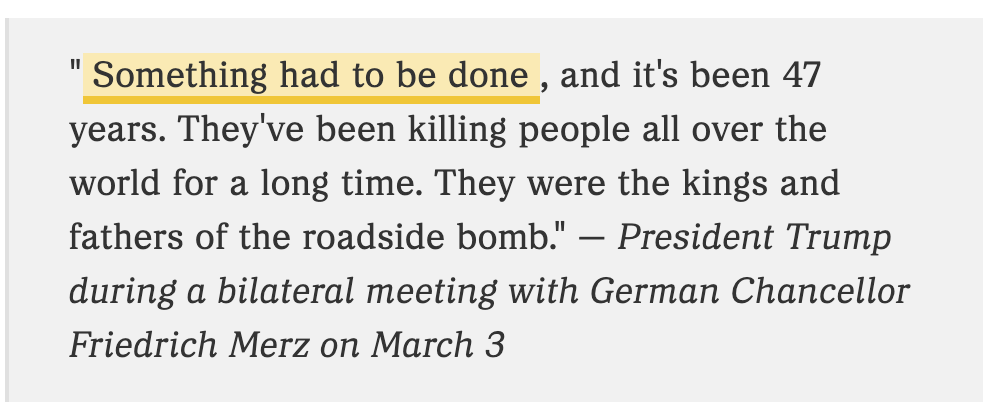
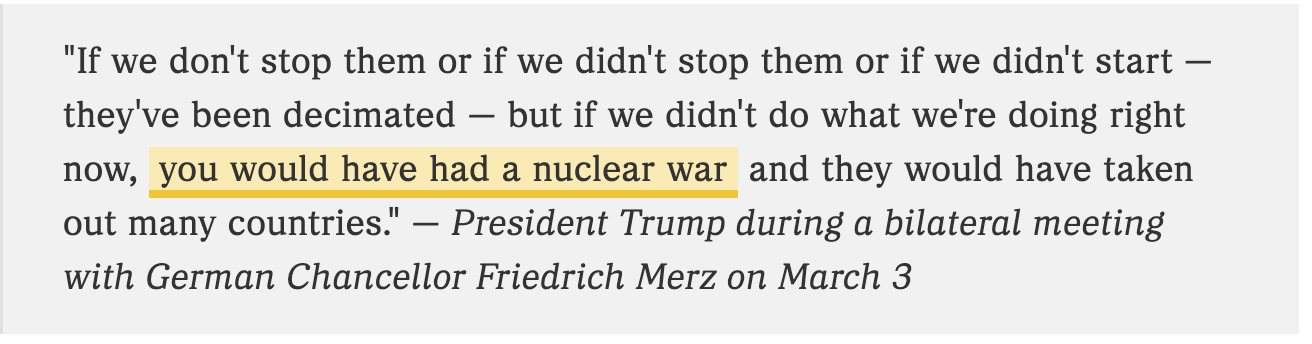
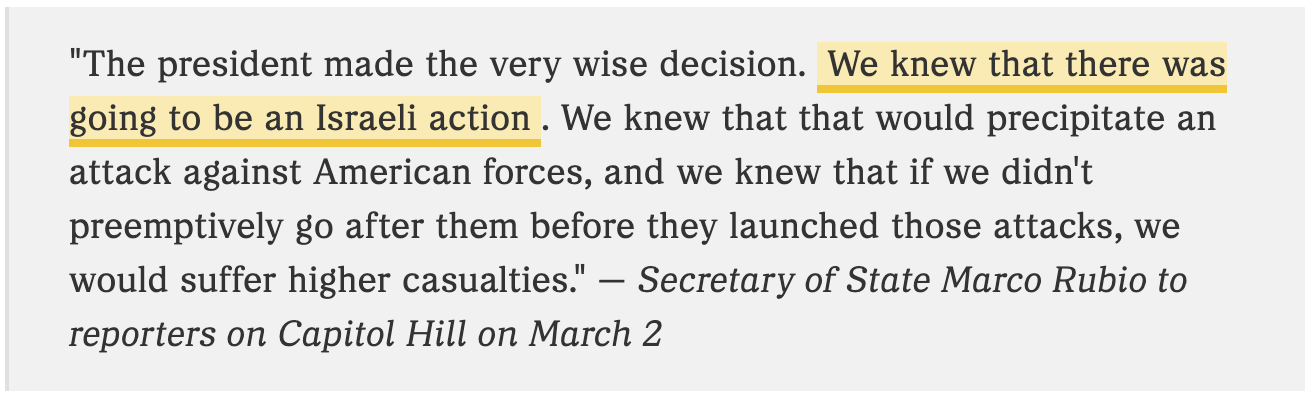
Multiple statements by the President and S.O.S. Marco Rubio
Source: NPR, “White House messaging on Iran conflict,” March 7, 2026.
In at least one exchange, the press secretary responded to a reporter’s question by stating:
“I reject the premise of your question.”
That response highlights a growing tension between the administration’s stated justification and the continued requests from journalists and lawmakers for additional detail.
Adding to the uncertainty, different officials have referenced a range of potential motivations, including preventing Iranian weapons development, responding to regional security threats, and broader strategic objectives. Some even noting grievances dating back decades (which is hard to use as justification when the attacks were deemed necessary due to an imminent threat).
For us, attempting to understand the precise trigger for the strikes, the explanation remains unclear.
Congress and the War Powers Debate
While military escalation was unfolding overseas, a separate debate was taking place in Washington.
The U.S. Constitution grants Congress the authority to declare war, while the president serves as commander-in-chief of the armed forces.
In practice, modern conflicts often blur this distinction.
To address this tension, Congress passed the War Powers Resolution of 1973, which was designed to limit the president’s ability to engage in prolonged military operations without congressional approval.
This week, the House of Representatives voted on a resolution that would have required the administration to obtain congressional authorization for continued military action against Iran.
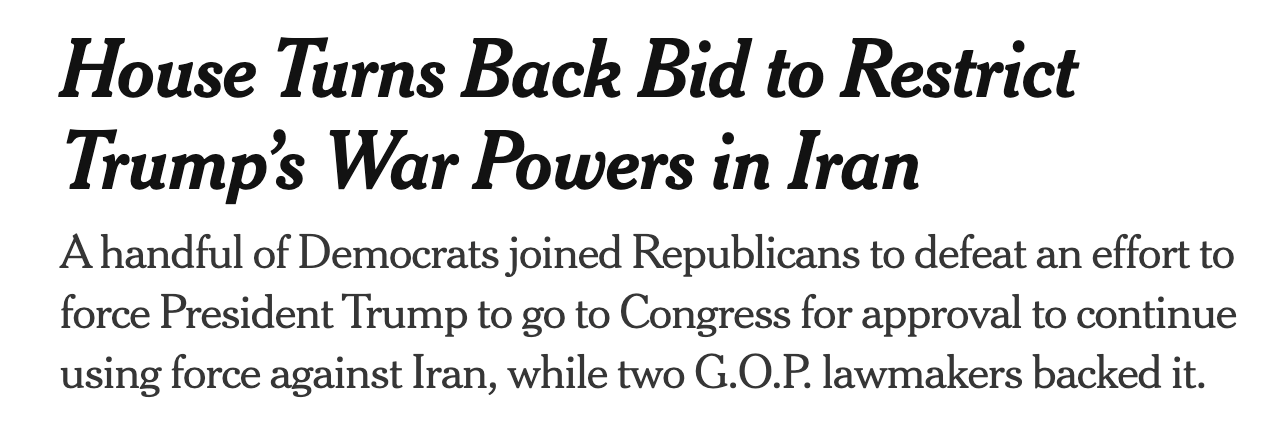
Source: The New York Times, House war powers vote coverage.
The resolution ultimately failed by a narrow margin (212-219), allowing the military operation to continue without new congressional authorization.
This vote does not necessarily end the debate.
If the conflict continues to escalate, lawmakers may face increasing pressure to either formally authorize the war or attempt to impose limits on military action.
Escalation and Regional Risk
One week into the conflict, the situation remains highly fluid.
Iran has responded with retaliatory strikes, several countries in the region have raised their military alert levels, and airspace closures have disrupted travel throughout parts of the Middle East.
These developments raise the possibility that the conflict could expand beyond the initial exchanges between the United States, Israel, and Iran.
The region is deeply interconnected through alliances, proxy groups, and longstanding geopolitical rivalries.
When conflicts escalate without clearly defined limits or objectives, each retaliatory action risks creating a new justification for further escalation.
The Global Economic Impact
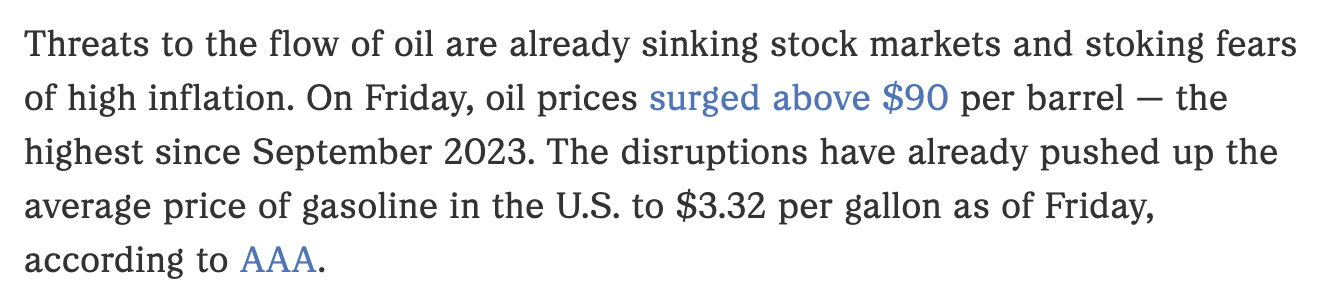
Beyond the immediate military consequences, the conflict is already producing global economic ripple effects.
Energy markets have reacted sharply to the uncertainty.
Oil prices have surged amid concerns that the conflict could disrupt shipping through one of the world’s most critical energy corridors.
Source: NPR, “One week into the Iran war, the fallout is global” March 7, 2026.
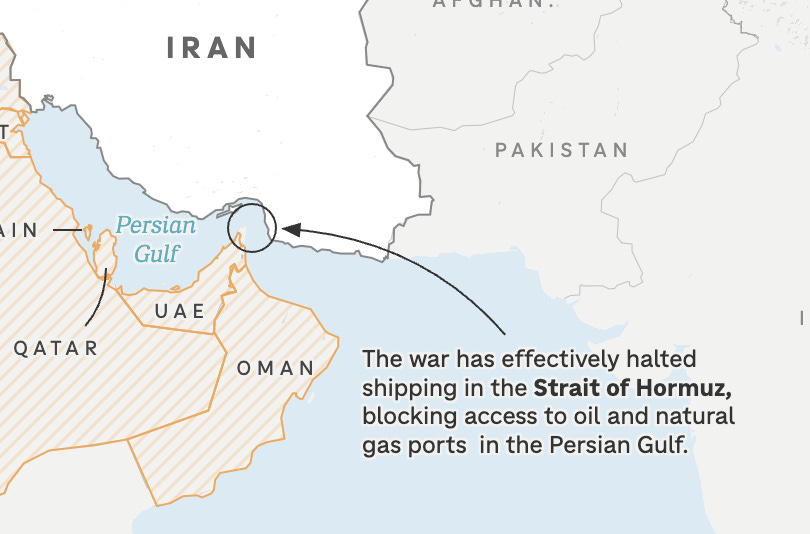
Much of the concern centers on the Strait of Hormuz, a narrow waterway between Iran and Oman that serves as one of the most important oil shipping routes in the world.
Source: NPR, “One week into the Iran war, the fallout is global” March 7, 2026.
Roughly 20 percent of the world’s oil supply passes through this corridor, meaning disruptions there can ripple quickly through global energy markets.
Even limited disruptions can push prices higher, affecting transportation costs, manufacturing, and inflation worldwide.
The Questions Still Ahead
A week into the conflict, the most important questions remain unresolved.
Will the fighting remain limited, or will additional regional actors become involved?
Will Congress move to formally authorize the military action, or attempt to assert greater oversight?
And how far will the economic ripple effects extend beyond the region?
In moments like this, the headlines often focus on the immediate military developments.
But the deeper questions about constitutional authority, strategic objectives, and long-term consequences will ultimately shape how this moment is remembered.
Understanding those structures is essential not only for interpreting current events but also for evaluating how the system is meant to function when the United States enters a war.
What to Watch Next
• Whether Congress attempts another war powers vote
• Whether Iran expands retaliation beyond regional strikes
• Whether oil disruptions affect global markets further
Written by Patty
Patty is the author of Politically POMP, an independent publication focused on explaining government systems, constitutional process, and the policies shaping today's headlines.1