
What Is the Insurrection Act, and How Is It Used?
Why a rarely used emergency power is suddenly part of the national conversation

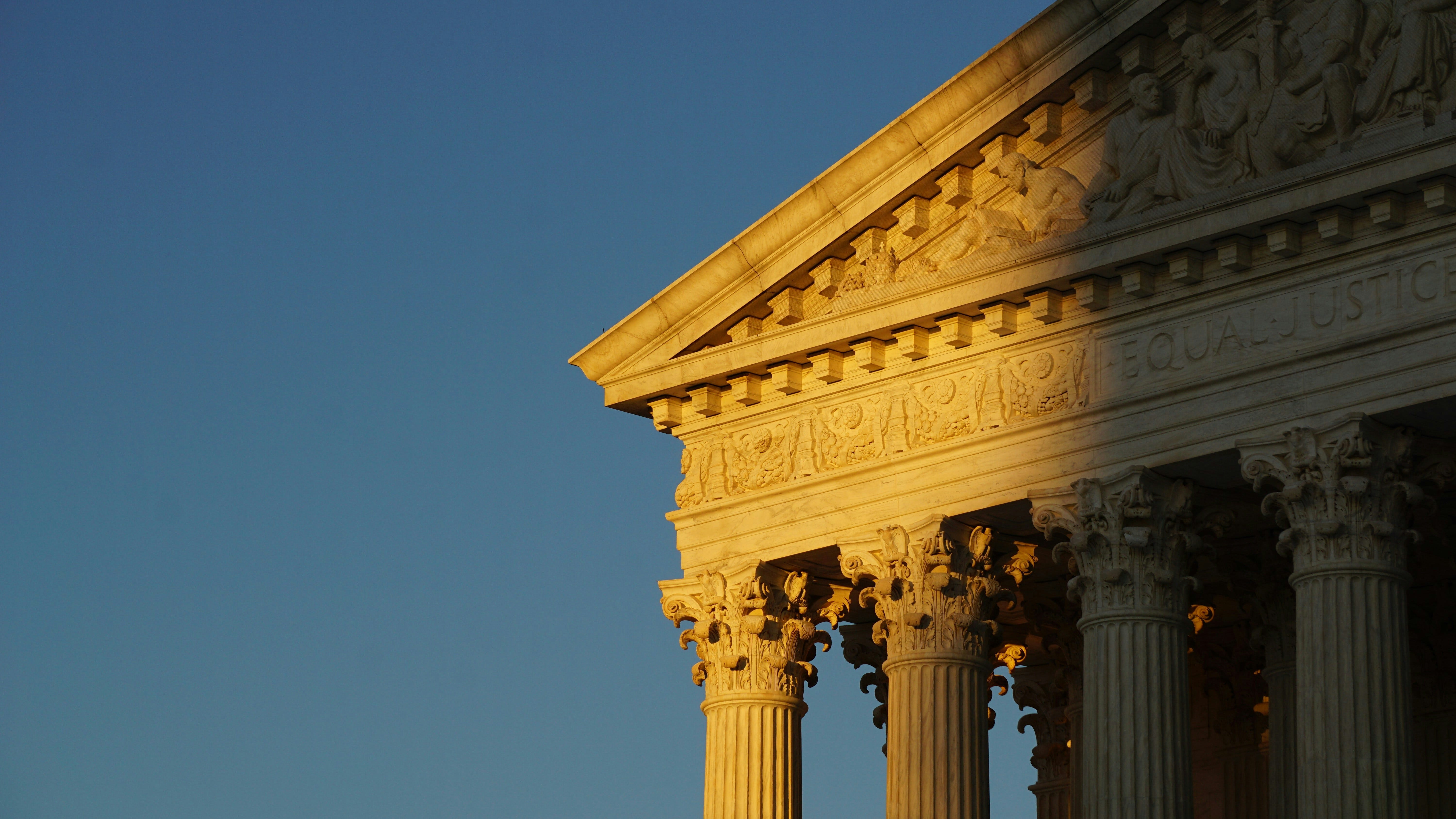
Photo by Ian Hutchinson on Unsplash
If you’ve been online today, you may have noticed something unusual: the Insurrection Act is being mentioned, again and again, across posts, threads, and conversations.
That alone is worth pausing on.
Not because the Act has been invoked.
Not because anyone has secret knowledge.
But because this is the law, people start talking about when the country feels unstable, when “order” becomes a political fixation, and when power begins to stretch in ways that make people uneasy.
Paying attention to that isn’t panic.
It’s awareness.
What the Insurrection Act Actually Is
The Insurrection Act is a federal law that allows the President of the United States to deploy military forces domestically under certain conditions, most notably when civil order is deemed to have broken down, or when state authorities are unable or unwilling to enforce federal law.
It is legal.
It is constitutional.
And it was designed as an extraordinary, last-resort power.
Crucially, the Act allows the president, in certain circumstances, to act without the consent of a state’s governor. That feature alone makes it one of the most sweeping domestic authorities granted to the executive branch.
This is not a law meant for routine unrest, political disagreement, or public dissent. It exists for moments of extreme breakdown, when the normal mechanisms of civilian governance have truly failed.
Why Its Use Is So Controversial
The controversy isn’t about whether the law exists.
It’s about what happens when its use becomes normalized.
Invoking the Insurrection Act collapses long-standing boundaries:
Between civilian authority and military force
Between protest and “threat”
Between emergency response and political control
Once the military is framed as a domestic solution to civic unrest, the threshold for using it again tends to drop. History shows that emergency powers, once exercised, rarely disappear quietly.
Legality does not equal wisdom.
Authority does not equal necessity.
A healthy democracy should feel deeply uncomfortable with the idea of deploying military force against its own population.
The Scope of Presidential Power Under the Act
One reason the Insurrection Act provokes such deep concern is the degree of discretion it grants the president once invoked.
Under this law, the president is granted what is often described as plenary authority, broad, largely unilateral decision-making power, over whether the conditions for its use have been met and how it is enforced.
In practical terms, this means:
The president alone determines whether an “insurrection,” “domestic violence,” or obstruction of federal law exists
No prior approval from Congress is required
No consent from a state governor is required in certain circumstances
Judicial review is extremely limited and often delayed
The president decides when deployment begins and when it ends
Once invoked, the Act allows the deployment of active-duty military forces or federalized National Guard units to perform domestic law-enforcement functions, something normally prohibited under U.S. law.
This represents an extraordinary concentration of power in the executive branch, intentionally designed for rare and extreme situations.
It is important to be precise here: plenary does not mean unlimited. Actions taken under the Insurrection Act are still, in theory, subject to constitutional constraints.
But timing matters.
Courts tend to review actions after they occur. Congress often responds after precedent has already been set. By the time challenges move through the system, the deployment and its normalization have already happened.
That lag is not accidental. It is a structural vulnerability.
The danger of the Insurrection Act isn’t that it exists; it’s that its use depends almost entirely on one person’s definition of “order.”
A Critical Historical Distinction
It is also worth being historically precise about how rarely this authority has been used without a governor’s request, and why.
The last time a president invoked the Insurrection Act over the objection of a state government was in 1965, when President Lyndon B. Johnson deployed federal troops and federalized the Alabama National Guard to protect civil rights marchers during the Selma-to-Montgomery marches.
At the time, state authorities were either unwilling or unable to protect Black Americans exercising their constitutional rights to protest and vote.
In other words, the most recent unilateral use of this extraordinary power was not to suppress dissent, but to enforce civil rights when states refused to do so.
That distinction matters. It underscores how high the moral and constitutional threshold for unilateral invocation was understood to be, and how dramatically the implications change depending on whether federal power is used to protect constitutional rights or to override civic resistance.
Why People Are Nervous Now
The concern many people are feeling today isn’t rooted in a single event. It’s rooted in patterns.
We are watching:
Escalating “law and order” rhetoric
Dissent increasingly framed as danger rather than disagreement
Federal force treated as a visible symbol of control
Public conditioning to see militarized responses as reassurance
When unrest, whether protests, strikes, or resistance, is described primarily as a security threat rather than a civic signal, the conversation shifts. It becomes less about addressing underlying causes and more about enforcing compliance.
That shift matters.
Emergency Powers and Democratic Strain
Authoritarian systems rarely announce themselves outright. They don’t begin by suspending elections or declaring a dictatorship. They begin by expanding emergency powers and redefining normal civic activity as disorder.
The danger is not a single invocation of the Insurrection Act.
The danger is lowering the bar for when it feels acceptable to use it.
Each time the conversation moves from “unthinkable” to “maybe necessary,” something erodes, often quietly, often legally.
Democracy is not preserved by laws alone.
It is preserved by restraint.
A Line Worth Holding
The Insurrection Act should never feel like a casual talking point. Its existence should make us cautious, not comforted.
The question isn’t whether the law is real.
The question is how easily we begin to imagine using it.
Paying attention isn’t fearmongering.
It’s citizenship.
And in moments like this, awareness is not optional; it’s a responsibility.
The vast chasm of circumstances regarding what the Insurrection Act was last used for, and what it might be used for now, is absolutely staggering. Also, the length people are willing to go in order to dismiss the actions of the current administration makes me rethink most of the relationships in my life.